Wearable Cancer Devices, YC's Health Tech Bet, and $48.7 Billion for Research: What March Tells Us About Where Health Tech Is Going
March 2026 delivered three stories that reveal a clear trajectory: the boundaries of what technology can do for patients are expanding, startups are automating healthcare’s most broken workflows, and the federal government is backing biomedical research with real money.
Here’s what we covered in the second edition of The Anti-Newsletter.
The FDA Approves a Wearable That Fights Cancer
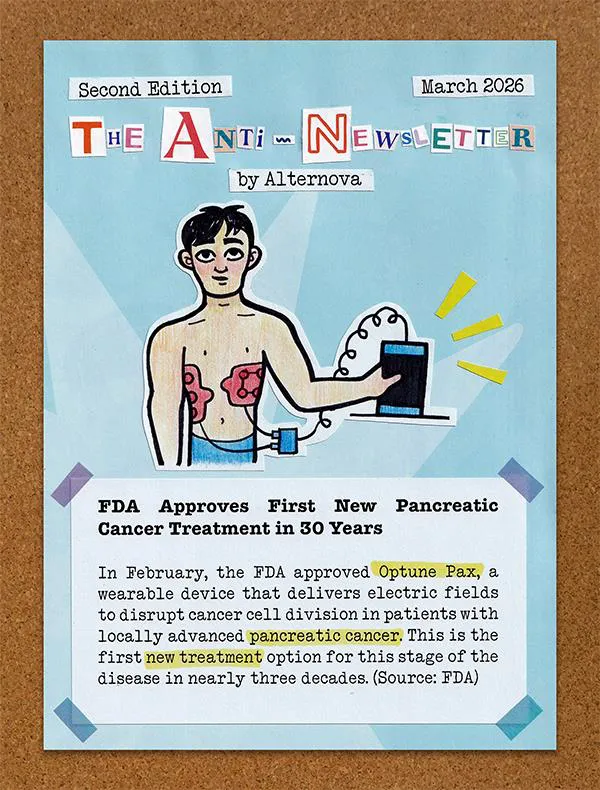
On February 12, the FDA approved Optune Pax — a portable wearable developed by Novocure that delivers alternating electric fields to disrupt cancer cell division in patients with locally advanced pancreatic cancer. It’s the first new treatment for this stage in nearly 30 years.
In the Phase 3 PANOVA-3 trial, patients using Optune Pax alongside chemotherapy showed median overall survival of 16.2 versus 14.2 months — and pain progression was delayed by over six months. This isn’t a wellness tracker. It’s wearable technology treating one of oncology’s most aggressive cancers.
Y Combinator Backs a Wave of Health Tech Startups
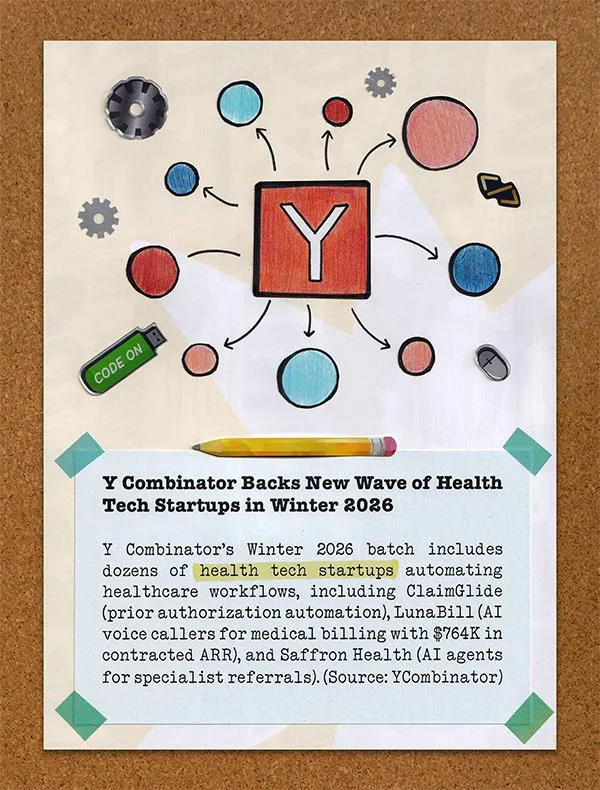
Y Combinator’s Winter 2026 batch included dozens of health tech startups, and the pattern is clear: AI agents automating workflows that quietly drain healthcare’s time and money. ClaimGlide automates prior authorization submissions and appeals. LunaBill uses AI voice callers for insurance claim follow-ups — consuming 80% of a billing team’s day — and has reached $764K in contracted ARR with partnerships including Mayo and UC health systems. Saffron Health automates specialist referrals, handling provider matching, prior auth, and appointment booking.
The most investable health tech opportunities right now sit at the intersection of AI and operational pain points.
Congress Secures $48.7 Billion for NIH Research
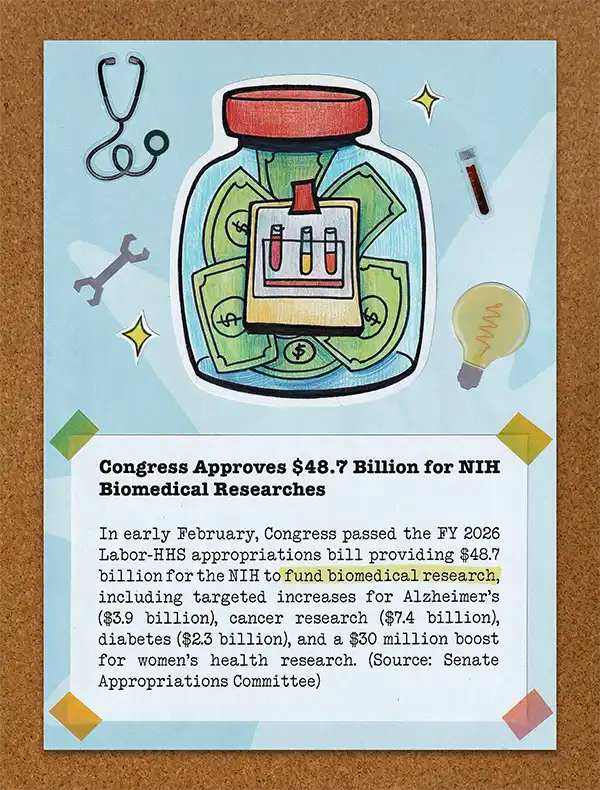
In early February, Congress passed the FY 2026 Labor-HHS appropriations bill, providing $48.7 billion for the NIH — a $415 million increase over FY 2025 and a rejection of proposed 40% cuts. The bill includes $3.9 billion for Alzheimer’s, $7.4 billion for cancer, $2.3 billion for diabetes, and a $30 million boost for women’s health research.
For health tech companies building on emerging science, this sustained investment creates a tailwind of new clinical evidence, biomarkers, and therapeutic targets.
The most investable health tech opportunities right now sit at the intersection of AI and operational pain points.
The Gap That Still Needs Closing
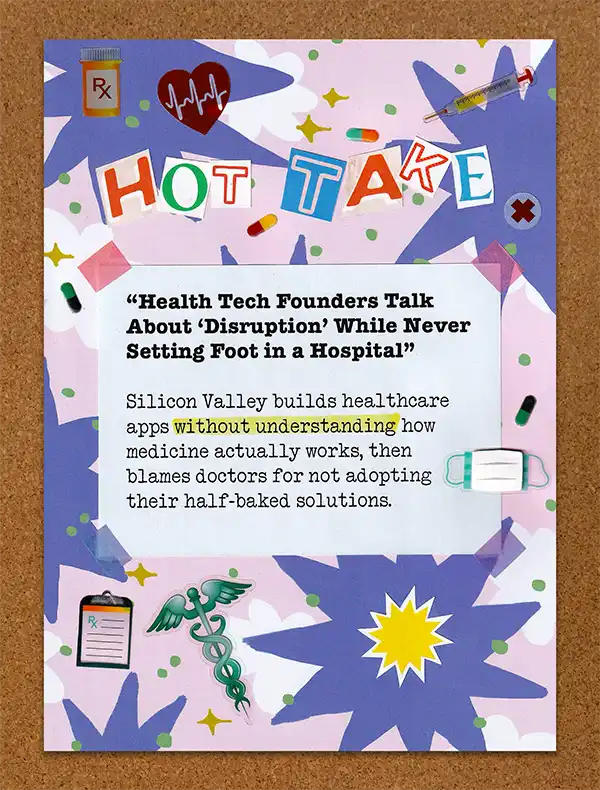
This month’s hot take hits hard: “Health Tech Founders Talk About ‘Disruption’ While Never Setting Foot in a Hospital.” Silicon Valley builds healthcare apps without understanding how medicine works, then blames doctors for not adopting half-baked solutions. The companies that actually scale start by listening — spending time in clinics, shadowing billing teams, and designing for the system as it is.