The Frontier Advances, the Money Reaches the Underserved, and the Guardrails Start to Appear
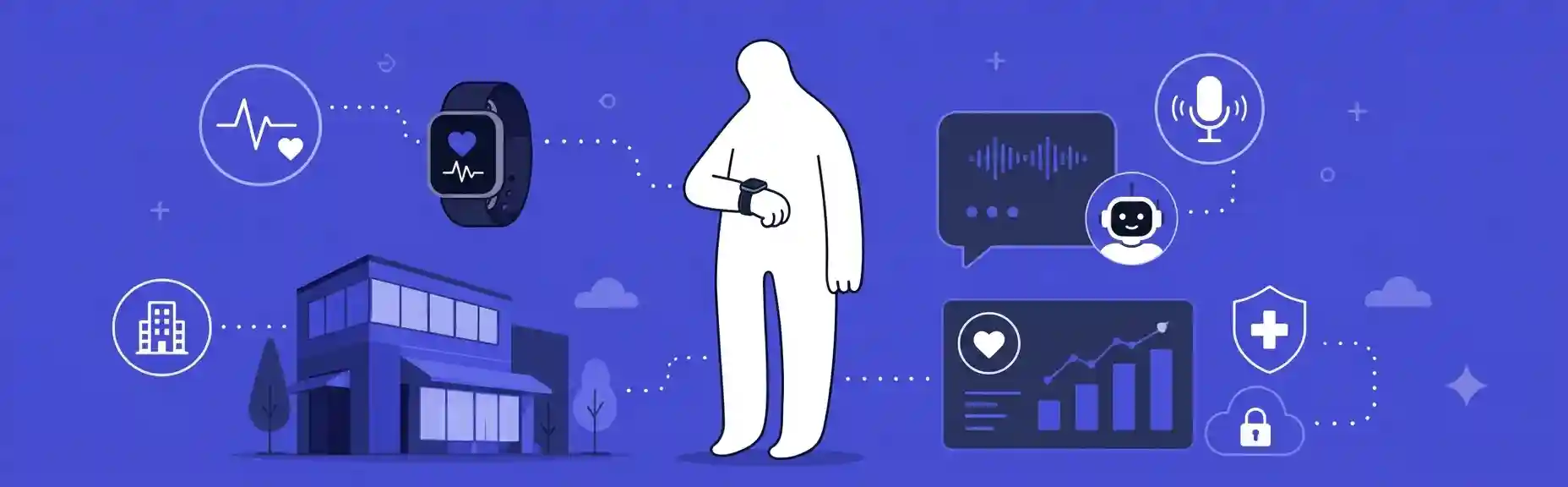
April 2026 offered a snapshot of health tech’s full stack in a single month: a consumer neurotech device that actively reshapes how you fall asleep, one of the largest public investments ever aimed at rural care, and the first serious move toward governing artificial intelligence in mental health. The breakthroughs are getting more intimate, the capital is finally reaching the people who need it most, and the rulemakers are starting to draw lines, even as the oldest problem in medicine, simply getting seen, stays stubbornly unsolved.
Here’s what we covered in the third edition of The Anti-Newsletter (our monthly, hand-cut, no-algorithm health tech scrapbook), and why each story matters.
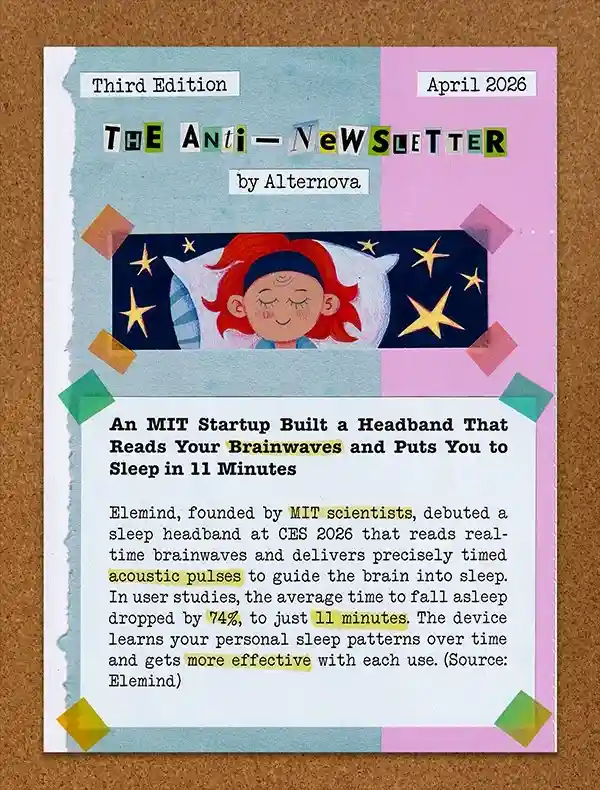
An MIT Startup Built a Headband That Reads Your Brainwaves and Puts You to Sleep in 11 Minutes
Elemind, founded by MIT scientists, debuted a sleep headband at CES 2026 that reads real-time brainwaves and delivers precisely timed acoustic pulses to guide the brain into sleep. In user studies, the average time to fall asleep dropped by 74%, to just 11 minutes. The device learns your personal sleep patterns over time and becomes more effective with each use.
Why it matters: this is wearable technology crossing the line from passive tracking to active intervention. Most consumer health devices still tell you what already happened: your steps, your heart rate, last night’s sleep score. Elemind’s headband does something to you, in real time, in a closed loop, and the fact that it sharpens with each use means the durable advantage lives in the adaptive model and the data, not the plastic. For founders, that is the lesson worth internalizing: in a maturing wearables market, the moat is increasingly the software that learns the individual, not the sensor that measures them.
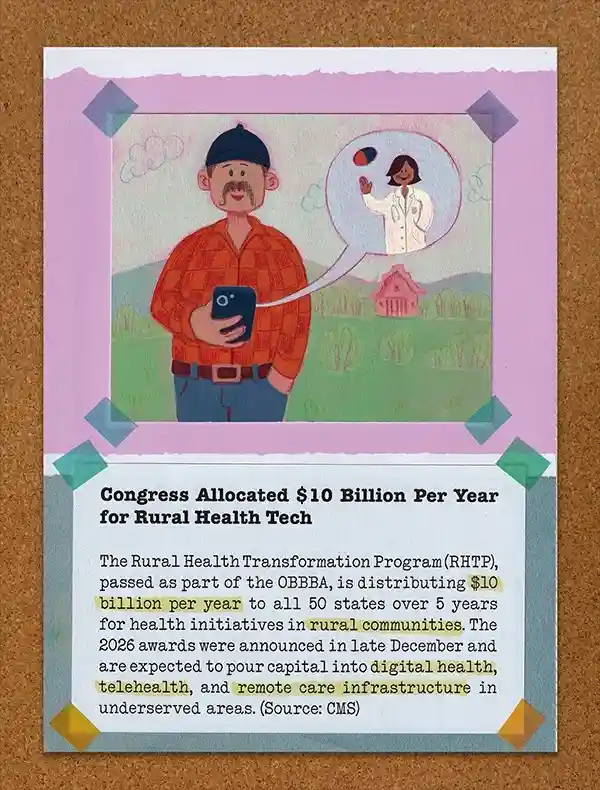
Congress Allocated $10 Billion Per Year for Rural Health Tech
The Rural Health Transformation Program (RHTP), passed as part of the OBBBA, is distributing $10 billion per year to all 50 states over five years for health initiatives in rural communities. The 2026 awards were announced in late December and are expected to pour capital into digital health, telehealth, and remote care infrastructure across underserved areas.
Why it matters: $50 billion over five years is one of the largest sustained public commitments to rural digital health on record, and crucially, it is demand-side money. It funds deployment, not just invention: it gives states and providers a budget to actually buy and run telehealth and remote-monitoring tools. For founders building in those categories, that means a buyer with cash and a mandate, in exactly the markets that distance and clinician shortages have left behind. The companies positioned to win will be the ones that understand rural delivery on its own terms (connectivity gaps, staffing realities, and trust) rather than porting an urban product into the countryside and hoping it sticks.
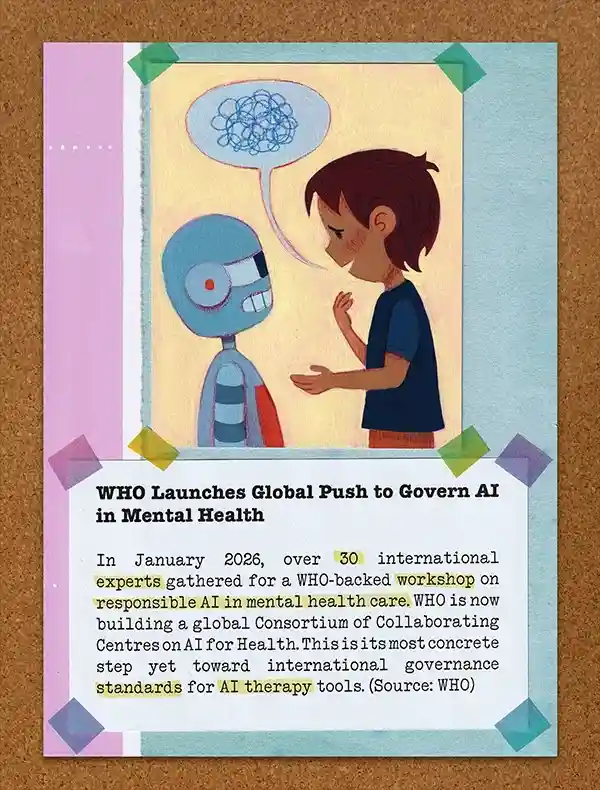
WHO Launches a Global Push to Govern AI in Mental Health
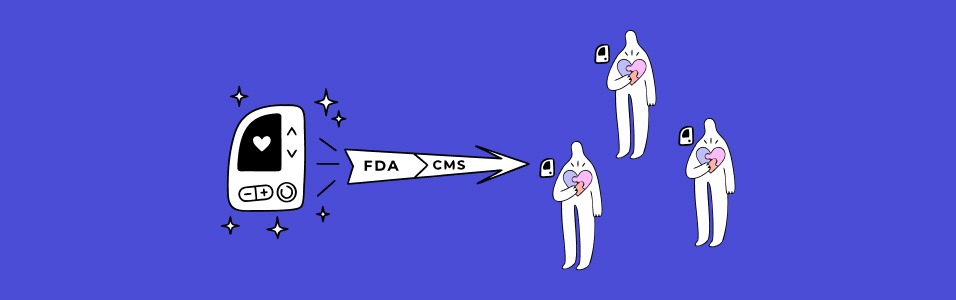
In January 2026, more than 30 international experts gathered for a WHO-backed workshop on responsible AI in mental health care. The WHO is now building a global Consortium of Collaborating Centres on AI for Health, its most concrete step yet toward international governance standards for AI therapy tools.
Why it matters: AI mental health tools (chatbots, triage assistants, always-on “therapy” apps) reached millions of people well before any framework existed to judge whether they are safe or effective. The WHO stepping in signals that global standards for efficacy, safety, and ethics are coming, and that the current free-for-all has an expiration date. For founders, that is not a threat so much as a roadmap: teams that align early with emerging governance (clinical validation, clear escalation to human care, transparency about limits) will turn compliance into a moat, while those treating mental health AI as just another consumer app may find the ground shifting under them.
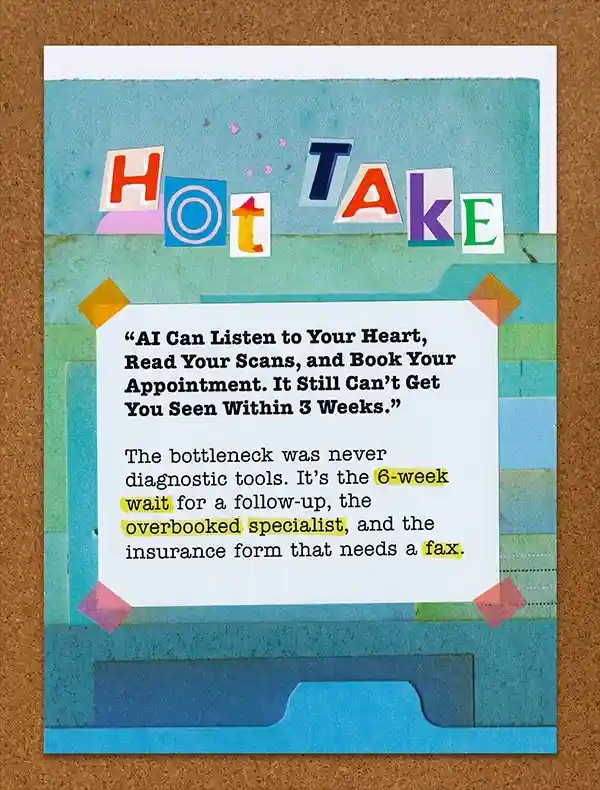
Hot Take: “AI Can Listen to Your Heart, Read Your Scans, and Book Your Appointment. It Still Can’t Get You Seen Within 3 Weeks”
The bottleneck was never the diagnostic tools. It’s the six-week wait for a follow-up, the overbooked specialist, and the insurance form that still needs a fax. We can build a headband that reads your brainwaves, an AI that flags a tumor on a scan, and a system that books the appointment automatically, and a patient can still wait three weeks to be seen by a human who has time.
That is the quiet thread running through this month’s stories. The device frontier is advancing, federal money is reaching rural communities, and global guardrails are taking shape (all real progress), yet the lived experience of care is still gated by capacity and broken operational plumbing. Faster detection means little if the system can’t absorb the patient it just identified. The most valuable health tech of the next few years may not be the tool that diagnoses one more condition, but the one that expands capacity and untangles the workflow: the appointment that gets booked sooner, the referral that doesn’t stall, the fax that finally disappears.